
What drives a media veteran to leave the safety of a 25-year tenure at Time Inc. to become an "outsider" in the radio industry, and eventually, the President of the global leader in premium experiences?
In this episode, Rachel Gerli sits down with Paul Caine, President of On Location, to trace a relationship that spans over two decades.
They first met when Rachel was a rising communications strategist and Paul was the CEO of Westwood One, leading a massive rebranding effort before a sale to Cumulus Media.
From navigating the early days of AdTech at Bloomberg and Magnite to his current role at the epicenter of sports and entertainment, Paul shares the leadership philosophy that has kept him ahead of the curve: "The difference between success and failure is your speed of learning."
GUESt BIO
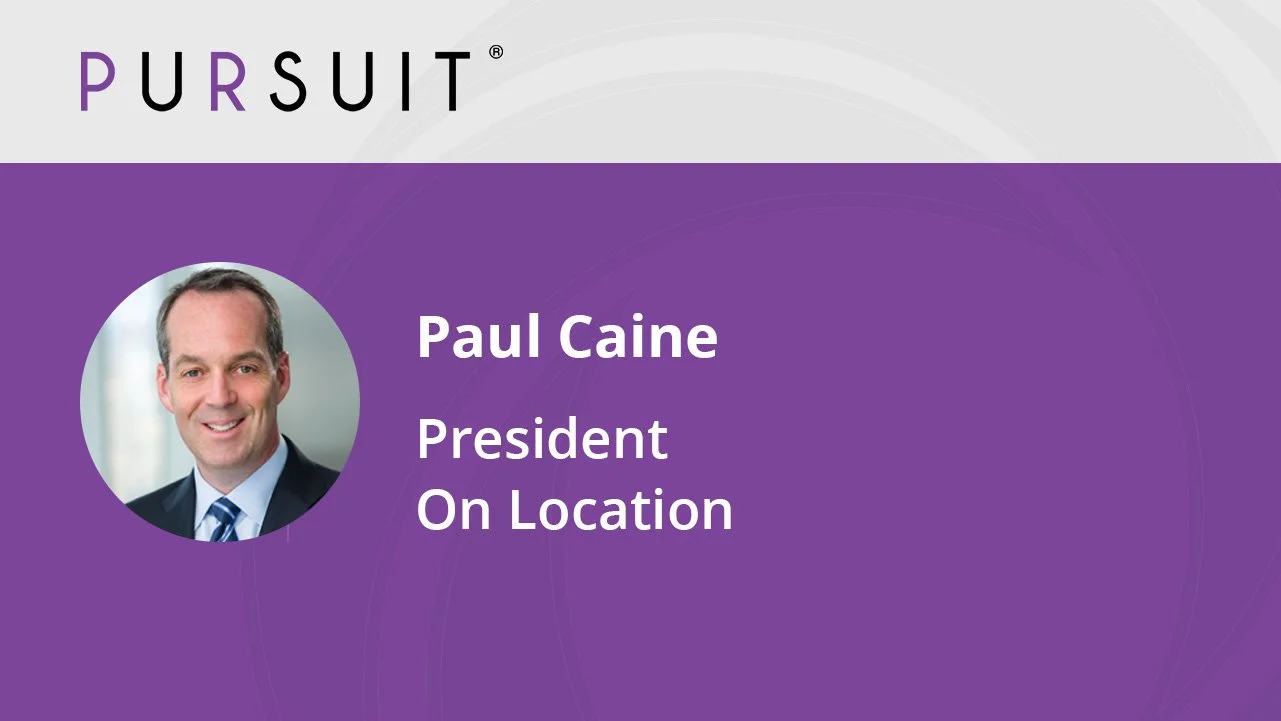
Paul Caine is the President of On Location and IMG Events, leading premium hospitality for global icons like the Olympics and the Super Bowl. A veteran media executive, he previously served as Global Chief Revenue Officer at Bloomberg Media and CEO of Westwood One. Caine also spent over two decades at Time Inc., where he rose to EVP and Chief Revenue Officer, overseeing brands like People and Sports Illustrated. Beyond his corporate success, he is the Co-Founder of the Griffin Cares Foundation, a nonprofit supporting families through pregnancy and infant loss, and serves as Chairman of Magnite.
I first met Paul Caine when I was 27 years old.
He was already a media titan, coming off a legendary 25-year tenure at Time Inc. I, on the other hand, was just five years into my career. We were in the trenches together, traveling to news stations across the country on a mission to rebrand a massive media company back to Westwood One.
At that level of executive success, it is easy to rely on your playbook. Most leaders in his position lean heavily on what they already know, protecting their status as the "expert in the room." Of course, I admired his resume—he was an industry giant—but what I truly connected with was his humility.
Despite his track record, he admitted to me how much it meant to him to succeed in this new chapter. He didn't act like a veteran who had seen it all; he acted like a student who was deeply committed to getting it right. He was vulnerable, curious, and relentlessly committed to learning a new industry from the ground up.
I realized then that Paul wasn’t just a refined executive; he was a true change agent. And looking back now, after sitting down with him recently for my podcast Pursuit Perspectives, I see that this quality is exactly what has kept him relevant for decades.
The Speed of Learning
Today, Paul serves as the President of On Location, the global leader in premium experiences (think: Super Bowl, Olympics, Rose Bowl). But the path that got him there is a masterclass in refusing to be stagnant.
He spent 25 years at Time Inc., where he was instrumental in shifting iconic print brands into the digital age. He then moved to Bloomberg, where he helped push a financial data giant into the fast-moving world of AdTech. He didn’t stop there; he went on to serve as Chairman of the Board for Magnite, helping guide the largest independent sell-side advertising platform in the world.
In our conversation, he shared a philosophy that defines his approach to leadership across all these distinct eras: "The difference between success and failure is your speed of learning."
This is the defining trait of a modern change agent. In an era where AI and rapid disruption are facts of life, resting on your laurels is dangerous. The moment you get comfortable is the moment you become obsolete. Paul’s career proves that you must be willing to be an "outsider" over and over again. Whether he was navigating the shift from print to digital or learning the logistics of the Paris Olympics, he consistently placed himself in rooms where he had the most to learn.
Humility as a Strategic Asset
We often mistake "change agents" for bulldozers—leaders who force a new vision onto a team through sheer will. But my experience with Paul showed me a different path.
Real change requires bringing people along with you. Because Paul approached new challenges with humility, he didn't dictate from a pedestal; he "walked alongside" his teams. When pivoting a massive organization, resistance is natural. A leader who claims to have all the answers triggers defensiveness. A leader who admits, "We are figuring this new world out together," builds trust.
The Refusal to Stagnate
Perhaps the most telling example of this mindset is how he landed his current role. It would have been easy for him to stay in his lane, riding out a successful career as a Chairman in the tech world. Instead, he cold-called Mark Shapiro at Endeavor. He didn’t make the call to pitch a grand strategy; he simply called to let him know he was open to work.
He chose to put himself back in "The Game"—not because he had to, but because he saw where the industry was going and refused to be left behind.
That is the ultimate lesson for leaders in 2026. To remain relevant, you must actively fight the urge to be comfortable. Being a change agent isn't just about fixing broken companies; it’s about constantly fixing your own perspective. It requires the humility to ask questions, the bravery to be a novice, and the commitment to never stop learning.
Watching Paul’s journey from a front-row seat has been one of the privileges of my career. It taught me that the higher you climb, the more you need to learn.